

21st July 2026
Student Engagement
dialogue, reflection,
and design
21st July 2026
Student
Engagement

Keynote presenter
Professor Jason M. Lodge, PFHEA – Professor of Educational Psychology and Director of the Learning, Instruction, and Technology Lab in the School of Education at The University of Queensland, Australia.
His work explores the cognitive and emotional mechanisms of learning with digital technologies, addressing critical questions of how technology, particularly AI, is shaping learning and education. Jason’s research informs educational policy and practice across Australia and internationally. He serves as an expert advisor for the Australian Government and OECD, applying his work to enhance equitable learning for all students.
Register to attend
Don’t miss out on the opportunity to attend this exciting half-day symposium.
Register now to secure your place and be part of an inspiring day filled with thought-provoking presentations, networking opportunities, and collaborative discussions.
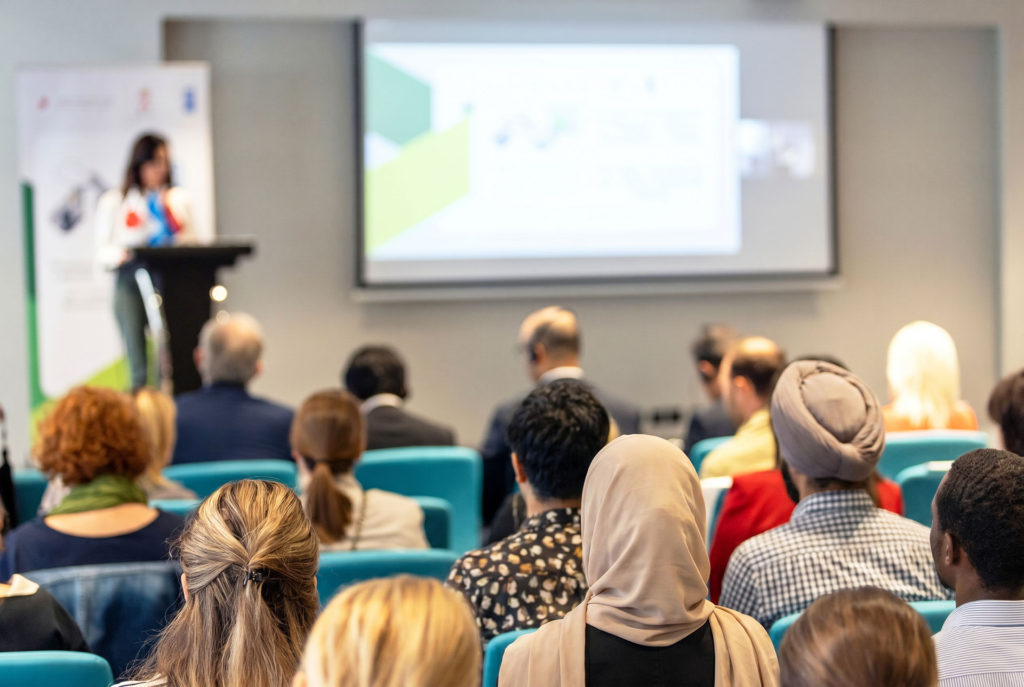
When you register, you will be emailed a Zoom link. However, if you are on campus and want to attend in person, you are most welcome to do so. The Symposium will be held at Lecture One, EO22, The Oorala Aboriginal Centre
Expression of interest
Are you passionate about sharing your insights and expertise? We’re inviting Expressions of Interest from individuals who wish to present at any of our upcoming symposiums. This is your chance to inspire, engage, and connect with a diverse audience by showcasing your work, research, or ideas. We welcome innovative and thought-provoking contributions.
Our Theme
For the Teaching and Learning Symposium theme Student Voice and Student Engagement, we invite submissions that explore how students are meaningfully involved as partners, contributors, and co-creators in the learning and teaching process.
.
We welcome presentations that demonstrate intentional strategies to foster active, inclusive, and authentic student engagement across diverse contexts. This may include co-design of curriculum, student–staff partnerships, feedback and evaluation mechanisms, peer learning models, student-led initiatives, and approaches that enhance belonging, motivation, and agency. Contributions that amplify underrepresented or marginalised student voices, and that address issues of equity, access, and participation, are particularly encouraged.
Submissions may draw on empirical research (e.g., Scholarship of Teaching and Learning), evaluative case studies, or critical reflections grounded in practice. We value approaches that move beyond surface-level engagement to demonstrate genuine partnership, shared decision-making, and reciprocal learning between students and staff.
Presenters should clearly articulate:
- The approach to engaging student voice,
- The nature and depth of student involvement,
- Evidence of impact (e.g., student learning, experience, retention, or success), and
- Key insights or implications for practice.
The symposium seeks to highlight rigorous, reflective work that positions students as active agents in shaping meaningful and engaging learning experiences.
Program
After registering, you will receive an email with the Zoom link to attend. Please ensure you are logged into your Zoom client on your computer to participate.
Abstract
The adoption of generative AI has outpaced our ability to evaluate its effect on learning. Decisions are usually framed around productivity, obscuring the distinction between AI that builds students’ capabilities and AI that produces output in students’ place. This distinction matters. Durable learning forms when students struggle productively with material and offloading that struggle to AI removes the very process that lays down lasting knowledge. We will discuss directions for supporting effective student learning alongside increasingly powerful machines.
Abstract
Widening participation in Australian higher education has produced increasingly diverse STEM cohorts whose success is shaped by belonging, identity, and access to support. Online, regional, mature-age, and first-generation students often face barriers to participation in traditional campus-centric support models. This study evaluates the Science Learning Hub (SciLHub), an equity-minded, relationship-rich tutoring initiative designed to foster academic success, belonging, and student partnership within a digitally dominant regional university.
Widening participation in Australian higher education has produced increasingly diverse STEM cohorts whose success is shaped by belonging, identity, and access to support as much as academic preparation. Online, regional, mature-age, and first-generation students often face barriers to participation in traditional campus-centric support models. This study evaluates the Science Learning Hub (SciLHub), an equity-minded, relationship-rich tutoring initiative designed to foster academic success, belonging, and student partnership within a digitally dominant regional university.
SciLHub provides free, personalised one-on-one and small-group STEM tutoring through flexible online delivery. Discipline-trained near-peer tutors are aligned within teaching programs and coached in dialogic pedagogy, scaffolding, and feedback literacy. Student voice is embedded through ongoing feedback, service evaluation, and tutor-student partnerships that inform continuous improvement and responsive service design.
Using a mixed-methods approach across nine trimesters, booking, academic outcome, and retention data were analysed for 621 students across 3,492 tutoring sessions in more than 75 subjects. Attendees demonstrated significantly higher pass rates (84% versus 54%), achieved mean marks 8.3‚Äì10.5 percentage points higher, and were 45‚ Äì93% more likely to re-enrol. Students identified personalised support, tutor approachability, flexible access, and enhanced science identity as key outcomes. SciLHub demonstrates how student-informed, relationship-rich tutoring can improve achievement, persistence, belonging, and equitable participation in contemporary STEM higher education.
Abstract
This presentation describes the development and early use of an AI-assisted clinical reasoning tutor in a fourth-year clinical exercise physiology unit delivered immediately prior to clinical placement. The tutor was designed to support students as they transition from theoretical knowledge to applied, defensible clinical decision-making in a safe simulated environment. Rather than providing answers, the AI assistant functions as a Socratic clinical educator, requiring students to justify assessment choices, intervention decisions, progression criteria, referral considerations and scope-of-practice boundaries before advancing through each phase of rehabilitation planning.
The tutor guides students through sequential clinical reasoning stages, including initial assessment, baseline measurement, goal setting, intervention planning, monitoring and discharge planning. Its design emphasises tissue healing, evidence-informed practice, risk-benefit analysis, multidisciplinary collaboration, and Accredited Exercise Physiologist professional scope. Early student feedback indicates that the simulation improved perceived clinical reasoning and decision-making, supported learning through Socratic questioning, and strengthened understanding of scope and referral boundaries. Students particularly valued being required to justify decisions, reporting that the activity made them think more deeply about why they were asking questions or selecting assessments.
The presentation highlights how carefully scaffolded AI simulation can promote student engagement, reflective practice and placement readiness.
Abstract
This presentation reflects on how mid-term student feedback was used to strengthen the design, delivery and learning experience of MM221 in Trimester 1, 2026. The Week 4 survey was conducted to understand students’ perceptions of unit clarity, lecturer support, assessment preparation, workload, communication, and diversity, equity and inclusion. Findings indicated that students valued the clear connection between weekly content, learning outcomes and assessments, as well as the lecturer’s approachability, responsiveness, inclusive classroom climate and regular engagement. However, students also identified areas requiring improvement, including the need for more visual learning resources, more explicit assessment and exam preparation, and greater use of quick knowledge checks in the online learning environment. In response, a range of enhancements were introduced in the second half of the term, including more visually engaging materials, interactive learning checks, and more responsive support strategies. The presentation demonstrates how student voice can be translated into practical, inclusive and evidence-informed teaching improvements.
Abstract

Michael Widjaja
Learners vary widely in how they engage with content and demonstrate understanding. Traditional written assessments, particularly in large first-year science cohorts, can inadvertently privilege particular communication strengths while constraining others. In response, we designed a major science communication task in a first-year biology unit (~300 students) using a “Choose Your Own Assessment” (CYOA) model grounded in Universal Design for Learning (UDL 3.0).
This presentation shares the design and evaluation of this group assessment which is implemented in a University of Sydney unit. Working in small groups, students make a series of structured choices, including their teammates, disease content, pharmaceutical context, and the format of their science communication task (poster, pamphlet, podcast, recorded presentation, video, or storybook). While these choices vary, all students address common learning outcomes and are assessed using a shared rubric focused on scientific accuracy, communication, engagement, and audience awareness. Scaffolded milestones and marker calibration support consistency and equity across assessment formats.
Grounded in Universal Design for Learning (UDL 3.0), the assessment positions student choice as a deliberate design feature rather than an accommodation. Evaluation through questionnaires, interviews, and unit feedback suggests students value the opportunity to exercise agency, express creativity, and take ownership of their learning, while academic performance remains comparable across assessment formats.
This presentation will reflect on the practical considerations of implementing structured assessment choice at scale and explore how intentionally designed flexibility can amplify student voice and engagement without compromising academic standards.
Abstract
This presentation explores how student voice and engagement emerge within professional learning environments where learners are simultaneously working professionals. Drawing on qualitative reflections and participant experiences across two interconnected contexts—Bachelor’s and Master’s teaching in Australian universities and executive development workshops within Indian industry settings—the study examines how trust-based, relational pedagogy enables authentic and sustained learner engagement.
The study argues that engagement among professional learners extends beyond conventional classroom participation models. Rather than engaging solely through academic discussion or assessment activities, participants actively connect management, organisational behaviour, and HRM concepts with their workplace realities, leadership challenges, and personal experiences. This integration generates deeper cognitive, emotional, and applied forms of engagement. Participant reflections indicate that learning extends well beyond the classroom, with many reporting continued application of concepts within professional practice and, in some cases, personal life contexts. Longitudinal insights from industry participants further reveal transformational outcomes, including shifts in leadership approaches, interpersonal behaviour, reflective capability, and sustained professional growth over time.
The findings suggest that student voice within professional education is experiential, reflective, and action-oriented, and is strongly shaped by the extent to which educators cultivate psychological safety and trust. When learners perceive their lived experiences and workplace challenges as legitimate components of the learning process, engagement becomes more authentic, sustained, and professionally meaningful.
The presentation proposes a novel practice-based model of layered engagement comprising immediate, reflective, transformational, and longitudinal dimensions. The model contributes to emerging discussions on student voice and work-integrated learning by offering practical insights for educators seeking to foster meaningful engagement among mature and professionally experienced learners
Abstract
Student attendance and engagement in on-campus classes have become increasingly challenging in higher education, particularly when learning is delivered primarily through theoretical content. In the unit EDEC354 Young Children Mathematicians, low attendance prompted the redesign of learning experiences to include practical, school-based observations. Instead of relying solely on lectures and readings, students were provided with opportunities to visit schools implementing different educational approaches, including Reggio Emilia, Waldorf/Steiner, and Montessori philosophies.
During these visits, students observed diverse teaching practices, learning environments, and pedagogical interactions that supported children’s mathematical thinking and engagement. Following each visit, students participated in reflective discussions to critically analyse their observations and connect theory with practice. Attendance during these experiential learning sessions was consistently high compared to theory-only classes. Students also provided highly positive feedback, reporting that they learned significantly more through direct observation of quality teaching and authentic classroom interactions.
This approach aligns with the educational philosophy of John Dewey, who emphasised that meaningful learning occurs through experience and active participation. The presentation highlights how practical and reflective learning opportunities can increase student engagement, deepen understanding, and better prepare future educators for professional practice.
Abstract
The academic journey to becoming a registered nurse involves applying pathophysiology to clinical practice. However, the extensive volume of content, coupled with the need for deep conceptual understanding and application, is reported to overwhelm students, especially those with varied prior science education or learning styles, thereby negatively impacting their academic performance in the high stakes’ exam. Students report specific constraints in writing short and long answer questions (SAQs and LAQs), thus warranting a tailored academic intervention.
Hence the aim of this research is to deliver and assess impact of tailored writing workshops in partnership with nursing students.
Science and education academics co-designed two one-hour workshops that were delivered in Week 2 and Week 10 of a 13-week trimester. The first introduced essentials and benefits of notetaking with the help of videos and images of real examples from past students. The second workshop will target strategies to answer SAQs and LAQs, including question analyses, expectations, and real time practice with contextualised questions.
The first workshop was delivered in March with 40 attendees and 68 views of the recording thus far. The second workshop is scheduled in May after which engagement data will be analysed.
More information coming soon.
A student discussion panel with Bea Davison, Sayed Ahmed, and Nina Gibson.
Conference organising committee
Conference Convener
Conference Session Chair
Conference Session Chair
Conference Media & Web
Conference Logistic Coordinator
We’re doing 3 Symposia this year!
This is our first one of the year, but we’ve got more planned. Have a look at the other themes to come!